

Marshmallow
From European herbal remedy to a modern confection.

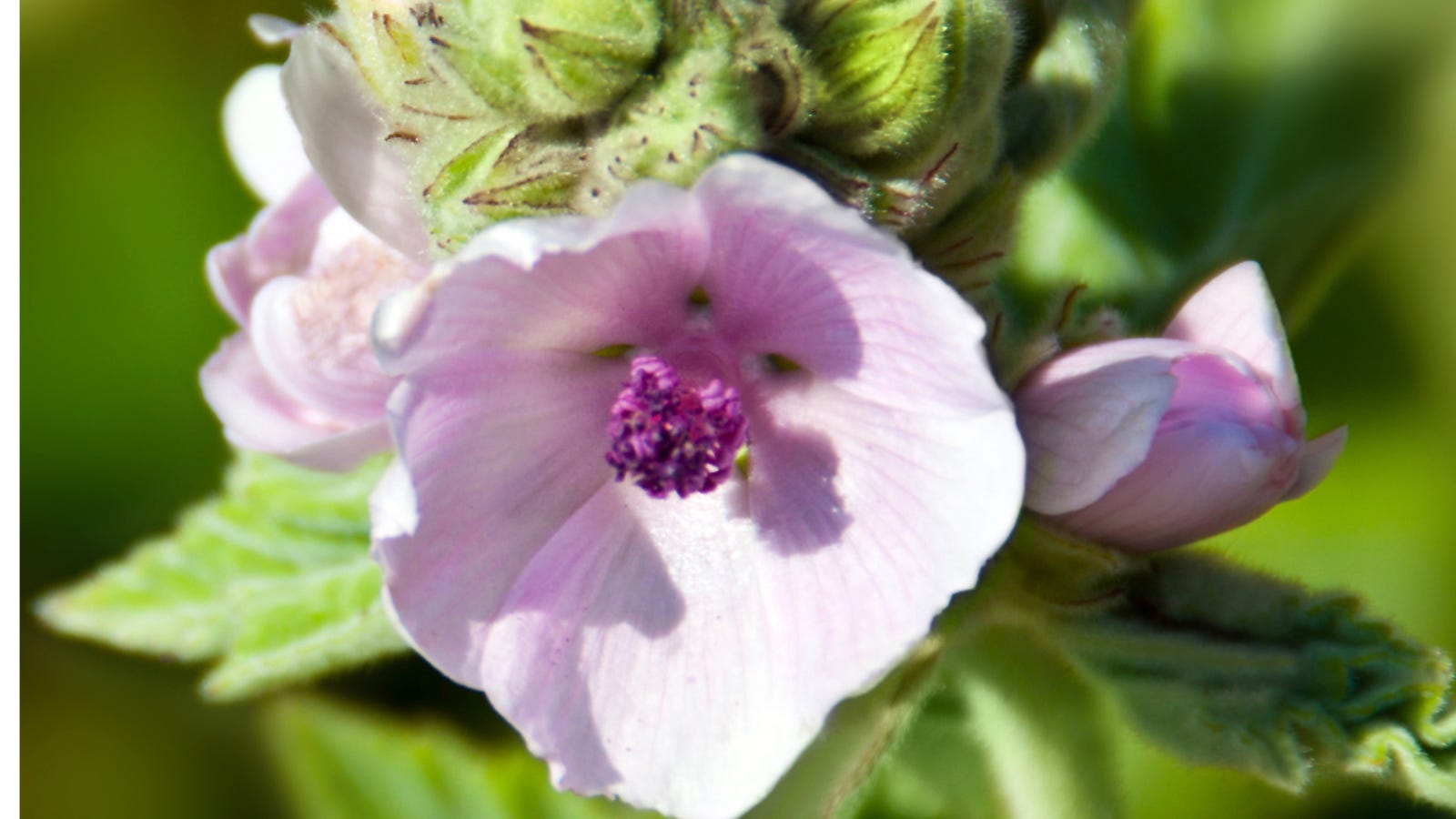
If you close your eyes and envision a marshmallow, what do you see? Perhaps visions of a campfire with a gooey white puffy treat roasting on a stick come to mind? But the modern sticky confection we enjoy in our s’mores is quite different from its original form and source. This is the story of a medicinal plant with a healing mucilage (slimy plant extract) made of polysaccharides, once commonly used to soothe sore throats.
Althea officinalis
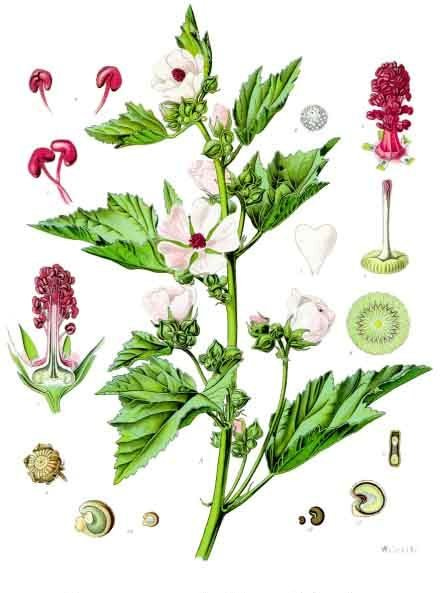
Marshmallow (scientific name: Althaea officinalis) is a perennial herb in the mallow family (Malvaceae). This is the same family that includes important crops like okra (Abelmoschus esculentus, also slimy due to its rich mucilage), hibiscus, and the medicinal plant mallow (Malva sylvestris).
Marshmallow grows wild along rivers and wetlands from Britain to the Balkans. Its name comes from the Greek word althein, which means “to heal.” The thick, pale roots of marshmallow contain a slippery mucilage rich in long chains of sugars, or polysaccharides, that swell with water to form a protective gel. This protective gel is known to be the key ingredient relevant to the healing properties of this plant.
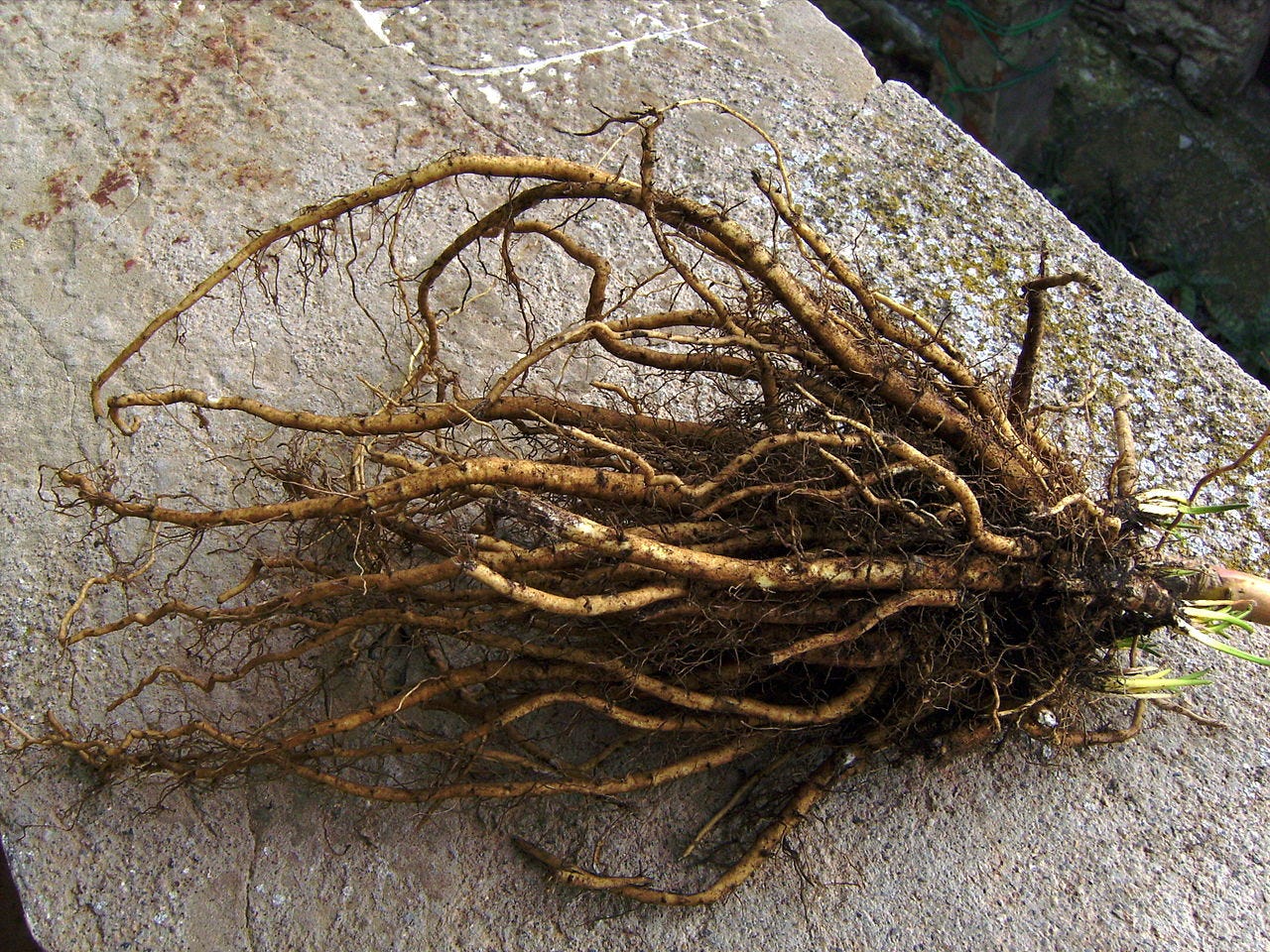
For centuries, marshmallow root teas, syrups, and poultices were used to soothe sore throats, dry coughs, ulcers, and wounds. Monastic gardens listed it among essential healing herbs for its coating and cooling properties, and it later earned a place in the European Pharmacopoeia.
Medicinal Properties of the Marshmallow Polysaccharides
A 2023 review article on this species highlights the biological activities of the complex polysaccharides found in marshmallow. For example, they can act as an antitussive, suppressing coughing as effectively as codeine, yet without the risk of narcotic side effects. The viscous polysaccharide gel heals by coating irritated mucosa and reducing inflammation. Other experiments reported antioxidant and antibacterial properties. In cell cultures (test-tube studies in human cells), marshmallow extracts stimulated epithelial regeneration, providing preliminary evidence in support of their traditional wound-healing use.
The polysaccharide-rich mucilage used for centuries in Europe to soften a scratchy throat and heal wounds is now recognized as a multifunctional biomaterial. Each molecule, a long chain of rhamnose, galacturonic acid, and glucose, forms a hydrophilic network that holds water and adheres to tissue.
When hydrated, these polysaccharides behave much like gelatin. They thicken, bind, and cushion, but unlike animal-derived gelatin, they are biodegradable plant compounds with additional antioxidant and anti-inflammatory benefits. Researchers are exploring them as sustainable hydrocolloids for foods, pharmaceuticals, and cosmetics. In experimental gels and lozenges, the root extract acts as both a stabilizer and an active ingredient. So, there may still be more to learn from this plant, and even innovations in medicine based on its unique mucilage chemistry.
From Apothecary to Patisserie
In early nineteenth century, French apothecaries began blending marshmallow root extract with sugar, honey, and whipped egg whites to make pâte de guimauve, a soft medicinal sweet for sore throats. The airy texture came from the mucilage itself, which behaves much like gelatin or other hydrocolloids, trapping air and water to form a stable foam.
As new technologies entered the food scene, the recipe was modernized to rely on gelatin in place of the silky root extract. The candy kept the name “marshmallow” but lost its botanical heart. What began as an herbal remedy evolved into a processed dessert crafted from gelatin, corn syrup, and artificial flavoring—nothing medicinal about it remains.
The Takeaway
In general, marshmallow root extracts are well-tolerated for internal or topical medicinal use. You can easily extract the mucilage by leaving chopped marshmallow root to soak in room-temperature water overnight. It can also be made into tea.
If you’re curious about how the original marshmallow confection/lozenge should taste, I found a recipe for making it from the plant root posted by the Cedar Mountain Herb School. This recipe does include gelatin, though. I can’t seem to find an original recipe like the one historically used in France without gelatin (based solely on egg whites, marshmallow root extract, and honey). If any of you readers find one or have experience making this, please share in the comments! I’d love to make a batch of medicinal treats for wintertime sore throats.
Yours in health, Dr. Quave
Cassandra L. Quave, Ph.D. is a Guggenheim Fellow, CNN Champion for Change, Fellow of the National Academy of Inventors, recipient of The National Academies Award for Excellence in Science Communication, and award-winning author of The Plant Hunter. Her day job is as Professor, Herbarium Director, and Associate Dean at Emory University School of Medicine, where she leads a group of research scientists studying medicinal plants to find new life-saving drugs from nature. She hosts the Foodie Pharmacology podcast and writes the Nature’s Pharmacy newsletter to share the science behind natural medicines. To support her effort, consider a paid or founding subscription to Nature’s Pharmacy or donation to her lab research.
The Plant Hunter is available in hardcover, paperback, audio, and e-book formats!

Signed Hardcover Clearance Sale! I have a limited stash of The Plant Hunter hardcover first editions, which are no longer available in stores since the paperback release. I’m offering them at $5 off while supplies last.
Each copy can be personally signed to you, to a friend, or simply with my signature. Just note your preference when you place your order.
📦 Available for shipment via USPS media mail within the USA only.
✨ Order your signed copy here.
Nature's medicine and food! Muscilagenous is such a good word, I've used it in the past describing Jewelweed (Impatiens capensis)
I found this article and recipe. Stay Puffed My Friends Part 2: France and Pâte De Guimauve — Adventures in Taste and Time https://share.google/JFggfP6l0yYUPILRf